Monday, July 30, 2012

Dustforce (PC)

Time Played: 2-3 hours

NOTE: I started this entry like, 2 months ago and never finished it! I apologize for the neglect! I've played a lot of games in the last couple of months that I'd like to write about, so I'm going to try to get them up here. In a way, the delay might end up being a good thing, since it lets my initial impression settle a little. For example, last year I wrote a glowing entry about Catherine - but pretty soon after I realized that most of my excitement was coming from the game being so unusual, not so much because I was actually enjoying it. Also I've found that almost every entry where I said "yes, I WILL keep playing this" I definitely did not. ;)   


What Happened: 
At the risk of pulling out a typical buzz-adjective, Dustforce can best be described as "slick" - it's an incredibly sleek, stylish game. On the surface it's a pretty simple 2D platformer where you run around removing all of the dust and dirt from the world, occasionally encountering critters and objects that have been possessed by the dirt that attack you until you 'purify' them (by whacking them a bunch of times). You play one level at a time, earning grades and unlocking more levels and more worlds as you go (level select is non-linear - you get to choose which levels you want to unlock).

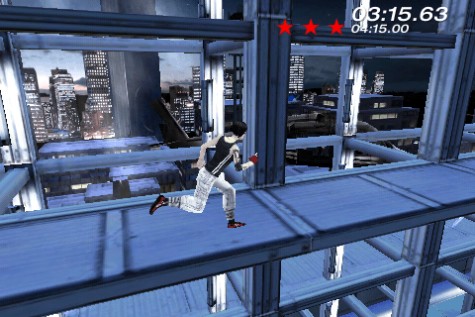
That said, what the game is actually about (at least as I perceive it) is movement, momentum and style. It's that perfect chain in gaming where you keep doing everything right; one movement blends into the next seamlessly, and you move continuously. The only other game I've played with a similar focus is Mirror's Edge, but I feel that this game was more successful (granted, trying to do something like that in 3D is a lot different than doing it in 2D. I think this game also offers something different because you can see the character (again, Mirror's Edge would have had a bigger challenge showing the character), but there's definitely something magical in seeing your character's continuous movement. You are given a letter grade at the end of each level in completion and style - completion being how much of the dust you cleared/creatures you purified, style being (I can only assume) how well your movements flowed. (There's never an actual breakdown of what style means, but that seemed to correlate.)


What I Liked:

Intro Animation! Clearly for an indie team, making a fully animated intro animation is a lot of extra work, and people generally argue that it is best to get the player playing as quick as possible - but in this case I think it was worth the effort for establishing tone. It's very cool, and it makes you feel cool for playing the game. ;)
You can watch it here!: http://www.youtube.com/watch?feature=endscreen&v=KZcpK3OU_bA&NR=1

Animation. Since this game is really all about style & momentum, it's vitally important that the characters look awesome when moving, which they do. Animations are fluid and flow together beautifully. Most important, I think, is the effects animation - there are always swipes, which emphasize fluidity and power in attacks. There's a pretty strong camera shake which accompanies a hit, which helps you feel the contact.

Characters. There are 4 playable characters, because apparently the animators didn't have enough to do - they all have a unique sense of personality in their movements, while still feeling consistent. Usually I don't care a lot about this sort of thing, and pick one character and stick to him/her - but I found a certain amount of fun in switching between the characters often to get a different feeling while playing.

Concept. I will always be a fan of non-violence in games, so I'm pretty down with this idea. Clean up the world. Cool. :) (You still beat the possessed things into submission though...)

Music. I wrote this bullet 2 months ago, and I honestly don't remember a lot about the music. I think it just fit the style of the game really well.


What I Didn't Like:

Controls. When I first downloaded this PC title, I tried to play it on the keyboard and I gave up almost immediately. This actually raised a ton of questions for me personally. I wonder if other people have the same problem with this game, or if it's just because I've never been a PC gamer, and I simply don't have the necessary skillset to play this game. I'm especially curious as to whether or not this game was intended for the PC from the start. If I were making a 2D platformer that was all about flow and momentum, I don't think the keyboard would be my instrument of choice. Did the game simply end up on PC because Steam is an actually realistic platform for indie teams and consoles are not? Also, it's possible that the devs always intended for the user to play with the controller on the PC, so it was never an issue in their minds. How many Steam users have controllers that they can plug into the PC? (My XBox controllers are both wireless - I ended up borrowing one from a friend). Once I switched to the controller, the game was great (although I had to manually set up the controls - which again makes me wonder what was intended). I have this gut belief that a game should be playable on a hardware's default setup - if it's on PC, it should be best with a keyboard and mouse. Am I being too idealistic?

Level Select. I don't really remember why this is in the 'didn't like' list. The level select was very open. You start the game in a 'level select' level - you can get to every other level and world through doors (most of which are locked, and you have to unlock). I think I just thought it was a little too directionless. I felt that an additional burden had been placed on me. ;)

Grades! I actually played this game right after I finished reading the book Punished by Rewards, which is about why grades and other incentives generally do more harm than good in terms of motivating people. In this case, I assume that grades are functioning as a gate, to make sure that you've gained the necessary skills to proceed to the next levels - but I still found them pretty demotivating! The grade for "style" was particularly rough, since I would occasionally feel as though I had done extremely well, and get a crappy grade. I'm not really sure what could have been done differently. "Style" seems like a difficult thing to measure - perhaps the system they built just wasn't quite there.


How Do I Feel About Continuing?:
I think this game was a good way to spend a couple of hours - and I definitely think it's worth checking out. In the end, for me, it was too frustrating. I never achieved that level of grace the game was pushing me towards. I felt like I was holding my characters back. ;)


Friday, May 11, 2012

Amnesia: The Dark Descent (PC)

Time Played: 30min OnLive Demo


What Happened:
I'm definitely not counting this one as a real game journal entry, since I didn't get far enough to get a real grasp of the game - but I learned some things, and I wanted to capture my notes.

To start, I'm a super-huge chicken when it comes to horror. I've always had a talent for scaring the crap out of myself with my own imagination (I had night terrors when I was 5), so it's been a general policy of mine to avoid adding anything new to my repertoire of Terrifying Things that pop into my brain at 3am when I'm alone in the dark. Really, it doesn't make a lot of sense that I even tried to play this game - but I was just so curious! Particularly as someone who is interested in alternatives to combat, and ways that games can explore emotion, I had to at least try to check it out. (I definitely recommend watching Thomas Grip's GDC Europe 2011 talk about the development of Amnesia here: http://www.gdcvault.com/play/1014889/Evoking-Emotions-and-Achieving-Success)

Luckily, the demo was short enough (and I moved slowly enough) that I didn't see anything particularly damaging. Simply put, Amnesia is a first person survival horror game. You walk through a dilapidated castle, finding messages from your 'former self' who gives you general hints about where to go, and fills in the story a bit. You are avoiding some sort of mysterious monster that you cannot kill. You find things like tinderboxes and oil to light your path - which is important, since your character's sense of reality breaks down when you stand in the dark for too long, or if you see something particularly disturbing. (I don't actually know what happens if you let it run down... the effect generally panicked me into moving as fast as possible towards a light source to calm Daniel down.)  

It's neat because I've been considering some similar techniques for an arty game I'd like to make! The subject matter is much different, but it deals with the idea of nerves. This game is a great reference point for me to learn from.


Notes:
Focal length. There is a constant, slight movement to the camera that's super unsettling. Even if you are standing perfectly still, the focal length is animating just enough to make you feel perpetually slightly off balance. It also makes the castle feel a little more alive.

Camera moves. There are times that the game takes camera control away from you for a moment, as though you're involuntarily jerking your head towards the source of a scary sound. It makes a surprising sound sound much more startling - and is much more like how you would react in real life.

Speed. Similarly, sometimes your speed is also out of your control. I think I mostly just noticed it in the beginning, when you are waking up and are in some sort of stupor. I believe that I've seen this in other games, but I like the idea of unbalancing the player by removing control that they are used to.

Distortion. The more panicked you get, the more the visuals distort. You can see it a little in the image above - particularly on the bookshelves. You're already scared, and it becomes increasingly difficult to see what is happening around you.

Audio. Sound is always a vital part of horror! It's the stuff you can't see that scares you the most. :) I think sound was used effectively - but since I've never played any other horror games, I can't say too much about it.  

My friend, Daniel. Weirdly, I didn't ever think of Daniel as 'myself.' I don't know if it was because of the amount of control that was taken away from me (I hope not, since I would like to play with those ideas!) . I'm hoping that it had more to do with the noise that Daniel made when he started to get scared. I might have been breathing a little faster than normal, but his panting & whimpering made me feel like it was my job to take care of him and lead him to well-lit areas. I don't know how many times I actually said out loud "it's ok, buddy, let's just go over here..." This separation is probably also due to the fact that I built up a lot of walls in order to have the courage to play this game. Perhaps it caused me to draw a line between myself and Daniel that I wouldn't have if I'd been willing to let myself fully experience fear. I will never know!


How Do I Feel About Continuing: 
After googling for some images to stick on the blog, I realized that there is some pretty messed up stuff in this game that I have no intention of ever seeing in context. I went into it not ever intending to play more than the 30min demo, and my plans have not changed. I am simply too much of a wuss. :)

Monday, May 7, 2012

Fez (XBLA)

Time Played: ~5-6 hours


What Happened:
Note: I'm still playing through the, I dunno, 'first part' of the game? I don't know anything about the alphabet yet, or any of the note-taking that seems to be required, or why you can get more than 100% completion of the game - I'm still just naively collecting cubes, taking things at face value. :)

For anyone that hasn't heard of Fez somehow, it's a 2D platformer where you have the unique ability to turn your perspective on the world in increments of 90 degrees. This opens up a whole, crazy world of things you can do with spatial relationships. At its simplest, it works in terms of being able to walk around something to find a path. For example, you're generally trying to move upwards in most levels - if I can't simply jump up to the next platform, I can shift my perspective, and now I see that the back of this building has some platforms that I can reach, or maybe some ivy that I can climb on. More complex: doing things like lining up ladders that aren't actually connected, or hopping onto a moving platform that needs to travel on a path, and lining up the completely separate pieces of the path while I'm in motion so that they connect. It feels hard to explain, which I think is a good sign that something interesting is being explored.

The goal of the game (at least at this point) is to collect cubes and cube fragments - I believe because the world is falling apart? You occasionally get to experience this destruction in levels that are being filled up with space tears, but it's really not a big focus. Gomez can die pretty easily, from falling from too high up, or touching a space tear, but you just start again at whatever platform you were last on with minimal delay -- which I really like because it encourages risk-taking and I'll talk about it below. There's no real sense of urgency about the world breaking down, it's much more an experience of quiet exploration than survival.  


What I Liked:
Sound design! Oh man, I'm putting this up first! I, like many people who make games, often make the mistake of not thinking about sound very much through most of the design process - but this game is a wonderful example of what great sound can do for an experience. The soundtrack is great, (you can listen to it and/or buy here: http://disasterpeace.com/album/fez), but more than that there are a number of small touches that make the world feel so satisfying. When you go behind an object because of the camera view, the music muffles and distorts a little bit. There's a woosh that happens when you've dropped from a high ledge and you're approaching the point that your landing will kill you. When you run along the ground in the more industrial areas, it sounds as though you are walking on metal. Sounds couple with the animation in a way that makes the world feel much more physical, which I think is incredibly important in a 2D game with simple graphics, which could easily feel very flat and unreal. The best, best part is the voice of your little Navi companion who guides you through the world. I can't describe it well - it's like this cross-dimensional, otherworldly, adorable yet low key and matter of fact voice that makes a little floating cube drip with character.

Concept. A huge part of the reason this game is so interesting is because it takes a simple concept - experiencing a 3D space in 2D - and just keeps on exploring it. It would have been easy to make a whole game based on the more simple idea that I described above, like "oh, I just keep rotating it until I find a path" and while that's a large part of it, I have been continually surprised by new devices that take advantage of this concept. Parts that require you to physically turn chunks of the level via cranks, platforms that rotate laterally in space rapidly (super disorienting!), ladders and paths that you have to construct by turning your perspective. I think there is a significant depth to the idea, that could not have come without a serious amount of real thought and exploration - maybe even 5 years worth. ;)

World! Sense of Place. Mystery. Ambiguity! I've said it in other journal entries, and I'll bring it up again - one of my favorite things is when I can think about a game I've played and remember it as a place, as opposed to just a series of actions - and this seems to happen most easily when game worlds have a certain sense of mystery. In high school I printed out pictures of temple ruins and stuck them in my sketchbooks so I could stare at them, and my favorite book was Gormenghast - I love it when you get the sense that this great, extravagant thing has been built and has completely outlasted the people that built it. I think Fez has quite a bit of that. Here are all of these weird, elaborate, empty places that totally invite you to use your imagination to think about how they could have gotten that way, or who might have lived here, or what purpose this thing was used for.

Charm. The way Gomez moves (particularly the flop and weight of his body when he latches onto a ledge), the generally friendly & usually bright style of the world, the way your cube companion talks, Gomez's drum kit, the way NPCs address you - there is a sense of playfulness that is friendly and inviting. Couple that with the sense of mystery, and I'm totally, head-over-heels about the overall vibe of this game.  

No death. The fact that you do not lose anything significant by dying makes a huge difference by allowing you to take much bigger risks. I don't need to plan my route ahead, or know that I'll be successful before trying a certain unknown path. I can learn by doing without needing to worry about the consequences. I don't think anything is lost by the exclusion of punishment for failure.

Challenge. At least right now, I feel like "I can beat this game." I have a sense that I can solve these puzzles, and I can find things and I'm not totally out of my depth like when I tried to play Mirror's Edge. It seems to be the appropriate amount of challenge and a good pace for me personally.  


What I Didn't Like:
Long. Personal taste! For all that I love about it, and while I do think it's important that the world is large enough to feel like a 'grand adventure,' I'm starting to feel like it's getting a little long for me. I might be close to the, I dunno, 'ending?' in that I'm close to getting all of the cubes - but from what I understand, there is quite a bit more, and I feel a slight sense of anxiety related to this. Will I actually be able to finish? How many more hours will I be putting into this game?

World Map? I have developed a complicated relationship with the world map! Somewhere around my 2nd session playing the game, I declared via Twitter that I thought the map was the reason behind my dropoff in motivation. On one hand, the map is incredibly helpful because it tells you if you've gotten all that you need to get out of a room. It's also just helpful in terms of helping you organize information. There are a LOT of levels, and if I think I missed a door in that room with the owl, I'd never be able to find it again if there wasn't a world map. On the other hand, I feel like I've just been handed a gigantic checklist of things that I need to do, and omg I'll never finish ever because there are a thousand rooms. I also feel bad when I leave a room without the map turning it gold to tell me I've done everything. There are things I don't currently have the means to solve, which means I'll have to go back there again eventually... which feels tedious.

Slow start? As much as I loved the game during the first session that I played it, it took me a full week to go back and pick it up again, which I think is mysterious, and I've been trying to figure out. I think it largely has to do with the world map, as mentioned above - but I think the other part is that I had an expectation that the rest of the game was going to be more of the same, and I would just be gathering cubes forever. Since I don't feel that way at all now, I'm going to take a leap and guess that the game might have just started a little slowly for me. Maybe there weren't enough of those little surprises in the beginning that I've come to expect now?


How Do I Feel About Continuing?
I suspect that this game would have easily become yet another game that I enjoyed, but never finished (simply because of the length of the game) - but I'm trying a thing right now where I make myself play games for an hour a day (I know, revolutionary!), and so I think I'm going to end up sticking with this one for a while yet. Maybe it will even enter the exclusive pantheon of Games I Have Actually Finished.

Friday, May 4, 2012

Super Crate Box (iOS)

Time Played: ~2hrs

What Happened:
I played this game a couple of months ago, but never got around to writing about it!

Super Crate Box is a simple game - you play as a little guy and try to collect crates, which appear at random points in the (single screen) level after the previous crate has been picked up. Enemies appear from the top of the level, a la Super Mario Bros, so you either have to avoid them, or kill them with the various weapons you pick up from the crates. The order of enemies is also randomized, although the longer you play, the greater the diversity of enemies. Each time you get a crate, you get a new, random weapon.

Crate collection gives you 2 different numbers: per life, and cumulative. At least in the first two levels, you need to collect 10 crates in a single life to unlock the next level (I'm going to make the assumption it continues on this way, but I only ever unlocked level 2). Also, all of the crates you collect while playing, regardless of your number of lives builds up as you play, and is used to unlock new weapons (and maybe other things? I only noticed weapons).


What I Liked:
Retro Aesthetic. I think the old school inspired visuals and music were great, and fit really nicely with the concept of a simple, yet brutally difficult game. The music in level one in particular helped to keep the energy high, and I think played a big role in my continuing to play for so long. 

Concept. Totally simple, super smart idea: your weapon changes each time. It works because there is a huge variety of weapons that often completely change the way you need to play - I would say the biggest part of the game is rapidly adjusting your actions to fit the weapon. I think the most fun part of the game was when I was still unlocking new weapons, since it was always surprising to see what each new one would do. Every weapon has its own advantages and disadvantages - the flamethrower covers a wide area, but isn't as strong as other guns, the disc gun and mines kill in one hit... but also hurt. I think the katana is probably really strong, but I've never managed to hit anyone with it without dying, since you need to get in so close.  


What I Didn't Like:
Controls. Sometimes it seems like the buttons aren't quite responsive - I feel like at least 30% of the time that I die, it has more to do with the controls than me. Also in level 2, the buttons actually block a bit of the level. I found myself making incorrect assumptions about if the crate was on the left or right bottom side of the screen since I was in a hurry and couldn't see.

Randomization. Obviously, randomization is part of what makes this game work. You never know what weapon you're going to get, or what enemies are going to come out, or where a crate will be. But it also makes for a lot of lives where you're just really really lucky and do well, and lives where everything just went wrong and there was pretty much no way you could have made it. Maybe it's because I never got to a point that I was really good at the game - but I felt like I had very little control over how well I was actually performing. It was more about if conditions had been favorable or not. For some reason that didn't stop me from playing though... so maybe I'm overstating it after the fact. I must have felt like I had some level of control if I was so willing to keep playing. Or maybe I just felt like I did at the time? :)

Some AI. I'm pretty sure some of the AI are like, impossible to beat. Maybe it's because I'm bad at games... but man, some of those guys. It was like "oh, he showed up. I'm dead."


How Do I Feel About Continuing?:
This game is definitely a 'time waster' - so while I found the experience enjoyable (...and incredibly frustrating) and I may pick it up again every once in awhile, I think for the most part my time with it is over. It was definitely worth what I paid for it! :)

Thursday, April 12, 2012

Mirror's Edge (360)

Time Played: ~30min


What Happened: 
Honestly, I could only bear to play Mirror's Edge for about 30min before I stopped - half in tears for how disappointed and frustrated I felt (I know, it's suuuper melodramatic). It didn't help that I was sick at the time, and not feeling particularly inclined to challenge myself - but this game was not at all what I was expected it to be. Look at the art! I naively expected to experience this wonderful sense of freedom! Think about parkour - the whole point is to see the world with the sense that you can get anywhere if you can just figure out how. Instead, the game opens to an incredibly tedious tutorial that asks you to remember sooo many buttons (most of which I immediately forgot), which contrasts terribly with the sleek, clean aesthetic. Then of course comes the combat section of the tutorial, which is mostly just silly. When I finally started playing, only a few moments into trying to get the hang of it, the annoyed radio commentary of my dispatcher began, telling me that I was "taking too long" - oh, and now I was being shot at.

Maybe the problem is my own? It's no secret that I simply don't possess the same first-person game literacy as most people that play games often - but I was really shocked at how much of a difference it made in this particular game. I needed to be quickly making decisions about how to get where I needed to go (or really, there was no time limit at first - just someone yelling at me), and suddenly I really felt how limiting first person actually feels. I think it was Andy Schatz during the Takedown Tribunal panel at PAX last weekend that said that first person felt "like looking through a porthole" and that's really what I was noticing for the first time in this game (particularly since most first person games make me motion sick, so I don't have a lot of experience playing them). I felt like I just couldn't see anything.

Anyway, I stopped playing somewhere after the second confrontation with armed guards, where I couldn't simply run away from them. :)


What I Liked:
The aesthetic. Really this is the reason this game has been on my 'to play' list for so long. It just looks really awesome, and inviting - like "you will feel free and wonderful in this environment."

Parkour. Since I'm someone that worked as an animator for almost 5 years, it shouldn't be too surprising to hear that I'm generally pretty fascinated by what the human body is capable of. I think dance is fascinating, I could watch breakdancing clips on youtube for hours, and I have definitely watched my fair share of parkour videos. I think it's amazing and inspiring to see what people can do - and realize that if I put in the time and effort, maybe I could do those amazing things too. I was excited to see a game that tried to do something with that - but because the game is first person anyway, you completely lose all sense of excitement about what your character is physically doing, which is really disappointing. That being said, it's still on my positive list that they were at least also inspired by something interesting like parkour... maybe it shouldn't be on my positive list. :)

Non-violence? The way people talk about this game, they make it sound totally revolutionary that you can get an achievement for never using a weapon.... I like the idea of non-violence, and I guess you can say that this games succeeds at being less violent than a lot of other games.... But I was surprised at how fast I was thrust into situations where the optimal path was punching a guy in the face. 

I guess it's sort of cool that Faith is a girl... but also I never see her and I don't really care. It's not like she's this well-written, strong character (maybe she develops more of a personality later, and I just didn't get that far?)


What I Didn't Like:
I think I covered it all already. It's hard to see, there are too many buttons to remember, you feel pressured all of the time (despite the beautiful, open aesthetic), you get shot at before you get a chance to learn anything, you're still encouraged to beat people up, etc... 

How Do I Feel About Continuing:
I don't think I will, thanks.


Mirror's Edge iOS
I also checked out the iOS game. It's not bad, and considerably less frustrating than the main game, but overall it's nothing special and got boring pretty quick. Your primary control is swiping, which is handled pretty well in most cases and works well. It's very similar to most endless runners (even though it's not endless) - you start Faith running, and then jump over and slide under obstacles, as well as knocking out guards and running laterally across some billboards. It's an ok way to spend a little bit of time. I put about 30min into it and haven't picked it up since.

Saturday, March 24, 2012

Limbo (PC - OnLive)

Time Played: 30min (OnLive Demo)


What Happened:
Hahaha, I don't even know WHAT just happened. I've known about Limbo for the last year or so, and was always sort of vaguely on my "I'll play this at some point" list. Today I went to OnLive to see if I could play any of the IGF games still, and I saw that I could play this for free and thought it was as good a time as any. So yeah, Limbo is clearly known for its macabre, creepy imagery - so I was expecting something creepy. In fact, I had put it off largely because I wasn't really sure what to expect and I thought it might even be a little scary (note: I'm the biggest wuss on the planet).

So, here I am in this quiet, creepy world that exists just to kill me. At the very beginning, I was trying really hard not to die, since I didn't know what would happen and it seemed scary - but then I walked into my first bear trap (I was trying to move it and I'm very clumsy with a keyboard). The death definitely made me jump (because it's startling when a bear trap slams shut on you), but I also didn't care because I found out there is no real consequence to death in Limbo.

Soon, eveything about Limbo just seemed really weird. I was just watching brutal death after brutal death. It wasn't scary or tense, it was just sort of gross. Is that what this game is about? I managed to die every single time there was an obstacle because I'm so terrible at games (also in my defense, I think most of the deaths are supposed to be unavoidable the first time?), but at some point because I wasn't feeling particularly emotionally engaged, I started to find my own incompetence pretty amusing. I was already moving in this direction (amusement) when OnLive dramatically altered my experience and I got my first spectator (in the end I had 3). Now people could see how often I was dying, which was pretty embarrassing - and consequently made the experience a lot funnier. (I even got a cheer for my 3rd or 4th death on the same obstacle).

In short, what the heck is this game? Is it supposed to feel serious, tense, or hilarious? Or just.. gross? Also I learned that OnLive's spectator system can dramatically alter how a player experiences a game.  


What I Liked: 

Puzzles. Some of the puzzles were neat, and required a bit of thinking. I wish I hadn't seen someone already solve the first spider - it might have taken me longer to figure it out. I particularly liked it when I was required to climb up into the trees, since it was a change of pace.

Art. Yes, everyone talks about this game for the art, and it's because it's cool. :) Now as for the mood...


What I Didn't Like: 

Build Up. I think the build up at the very start of the game seemed a little too slow. The first puzzle could have happened a bit sooner. The main actions are familiar to all platformers, so I didn't really need a lot of time to get accustomed to them, or figure out what I could do.

Deaths. The animations themselves were so over the top that they just seemed comical. Again, perhaps this was the intention - and if it was, I'm not really into that sort of thing. 

Mood? As I said above, the mood was unclear to me. The art says one thing to me: this is serious and creepy - but I didn't feel any of that while I was playing (aside for maybe the first 1-2min). For me, it all comes down to the fact that your death means nothing (and the death animations being a little goofy). I just couldn't care about dying. Oh yeah, also there's a whole section where you hop around after being bound up by a spider... how is that anything besides hilarious? 

How Do I Feel About Continuing?: 
I think I'm done, thanks. :) It didn't really feel like anything 'special' to me - just a puzzle platformer with neat art. Maybe if I could see it later in the game when the puzzles are more challenging, I might be interested... but the weird mood makes me inclined to think that the direction on this game was a little wishy washy, and that it really wouldn't be worth my money or time to see what else was in store. 

Friday, March 23, 2012

Rhythm Heaven Fever (Wii)

Time Played: 20min


What Happened:


I love the original Rhythm Heaven on DS so I was pretty excited when I found out they were making a new one for the Wii. In particular, my friends were passing around a link to "The Wrestler" which was hilarious so I couldn't wait to see what other cool mini games were in the new version. (Note: there are a surprising number of fan versions of the wrestler on YouTube.)

The Wii version is pretty much the same as the DS version as far as I can tell so far. You start the game and get a brief introduction by some characters who give you a rhythm test (maybe later I'm supposed to take it again to see if I've improved?) and then you go straight to a menu which leads to the mini games. You unlock games one at a time in columns - four unique games, and then a "remix" which is a sequence made up of clips of each of the 4 games. The mini games themselves are, as implied by the title, all rhythm based. Each takes you through a (skippable) tutorial, and then you tap your way through a 2-3 min "song." There are four possible outcomes for each game: it will either tell you to retry, give you an embarrassing "ok..." (with sweat drops and everything), give you a medal, or give you a "perfect." You always at least need to get an ok before unlocking the next game.


What I Liked:

Simple Yet Challenging. I know, right? It even says that on the box... It's true though. I struggle quite a bit in trying to figure out exactly why I find these games fun, but I think it comes down to the fact that they're super simple to understand, but I still take quite a bit of practice to get a perfect. It's never "too easy" or "too hard," at least for me. (Also they are hilarious, see next.)

Humor & Charm. I love crazy over the top stuff (example: Beyblade). These mini games are ridiculous in the best possible way. Kick soccer balls away to not ruin the weasels date? Catch tiny peas on a fork which are being flicked at you at a high velocity from so far away you can't even see the person? Be a monkey that lives inside of a wrist watch and tells the time by high-fiving other monkeys? I <3 this sort of stuff.

The Little Things. I think a lot of lessons can be learned from this game in terms of great, clear, fun ways to give positive and negative feedback to the player. Positive feedback is wonderful, and negative feedback, while still making you feel your miss, is usually hilarious - so I'm usually laughing instead of getting frustrated. For example, in "Monkey Tambourine," (side note, out of the 8 games so far, there have been monkeys in 3 of them) there is a small monkey who plays a rhythm and you repeat it. If you're slightly off, he grits his teeth as though he's totally embarrassed for you. If you miss completely, a frog lands on his head for an empty beat. If you succeed, his eyes get wide, and a spray of flowers appears above his head. Goofy, simple things that make this game feel good.


What I Didn't Like:

Platform! So clearly it's a Nintendo game, but I can't think of any particular reason besides that that this is only on the Wii. (Yes, yes, I know how it works - I just mean conceptually.) For the majority of the game you only press the "A" button, and in a couple of games it's a combination of A and B. It's super simple and the graphics are all 2D, so I can't imagine it would be expensive to port. In particular, an iOS version could work really well.

Wiimote. Since it does only require A and B button pressing and it is on the Wii, I did notice that "A" really isn't that great for fast tapping. In the one game I've played so far the required speed, I found that I actually needed to turn the Wiimote sideways to succeed. I needed that pressure on the bottom of the controller that you can't really get from holding a Wiimote the standard way. It's a big, deep, chunky button, so I had some issues there.

Hand-Holding? It couldn't very well be a modern Japanese game without a bit of over-explanation, right? For the most part, the constant explanation hasn't bothered me. In general, things are cutely written so I don't mind - but every once In awhile, they 'reassure' me just a little too much, which rubs me the wrong way.


How Do I Feel About Continuing?:

I'm totally there. I fully intend to play through to see the rest of the mini-games. That's the fun in this game: seeing what wacky ideas they've come up with, so clearly I have to play to the end.